730+
Satisfied Customers
Experience supporting customers across a range of digital product and software development requirements.

DevOps Consulting Services
Build a more reliable software delivery process with DevOps consulting services from Techanic Infotech QA. We help businesses in Qatar improve collaboration between development and operations teams, automate repetitive tasks, strengthen deployment workflows, and manage cloud infrastructure more effectively.
Whether you are modernising existing applications, moving workloads to the cloud, or establishing a DevOps practice from the ground up, our team can help you plan an approach that supports your technical requirements and business priorities.
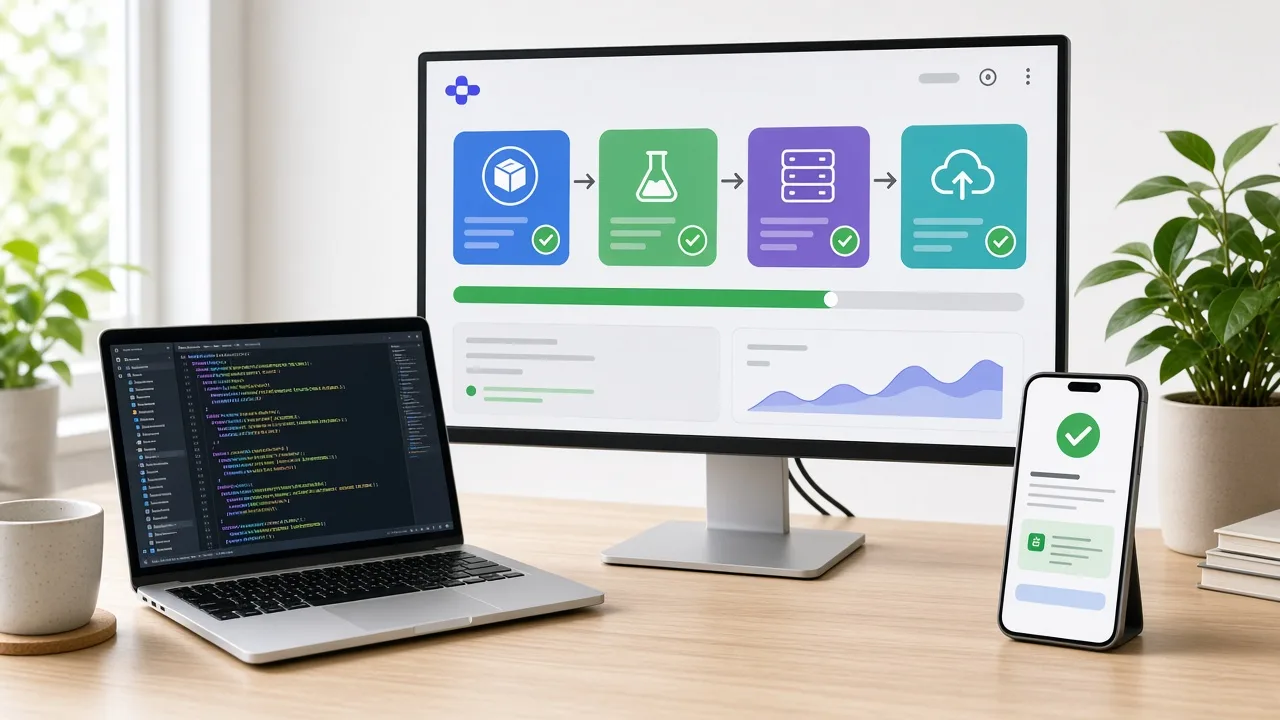
From infrastructure automation and CI CD implementation to container orchestration, monitoring, and security integration, we focus on building practical DevOps environments that support faster releases and consistent operations.
Techanic Infotech QA combines software engineering knowledge with cloud infrastructure and automation expertise to help organisations improve their software delivery practices.
730+
Experience supporting customers across a range of digital product and software development requirements.
70+
A team of technical professionals supporting application engineering, infrastructure planning, automation, and software delivery.
5+
Practical experience in software development and digital delivery, supporting businesses as their technology requirements evolve.
99%
A company reported retention figure reflecting its focus on long term client relationships.
As a DevOps consulting company in Qatar, we help organisations evaluate their existing development workflows, identify operational bottlenecks, and introduce automation and infrastructure practices suited to their applications.
Tap a service to view details, features, and next steps.
We assess your development lifecycle, deployment process, infrastructure, and operational challenges to create a practical DevOps roadmap. Our recommendations focus on improving delivery consistency, team collaboration, and operational visibility.
Manual deployments, inconsistent environments, and limited infrastructure visibility can slow down software teams. Techanic Infotech QA helps businesses assess these challenges and identify practical opportunities for automation, cloud optimisation, and more dependable releases.
Whether you need a new CI CD pipeline, cloud infrastructure guidance, or a complete DevOps transformation plan, we can help you identify the right starting point.

Every application has different deployment, scaling, security, and infrastructure requirements. Our DevOps consulting approach considers your current architecture, team capabilities, delivery goals, and operational constraints before recommending a solution. We do not assume that every organisation needs the same cloud platform, orchestration system, or level of automation.
CI CDConcept
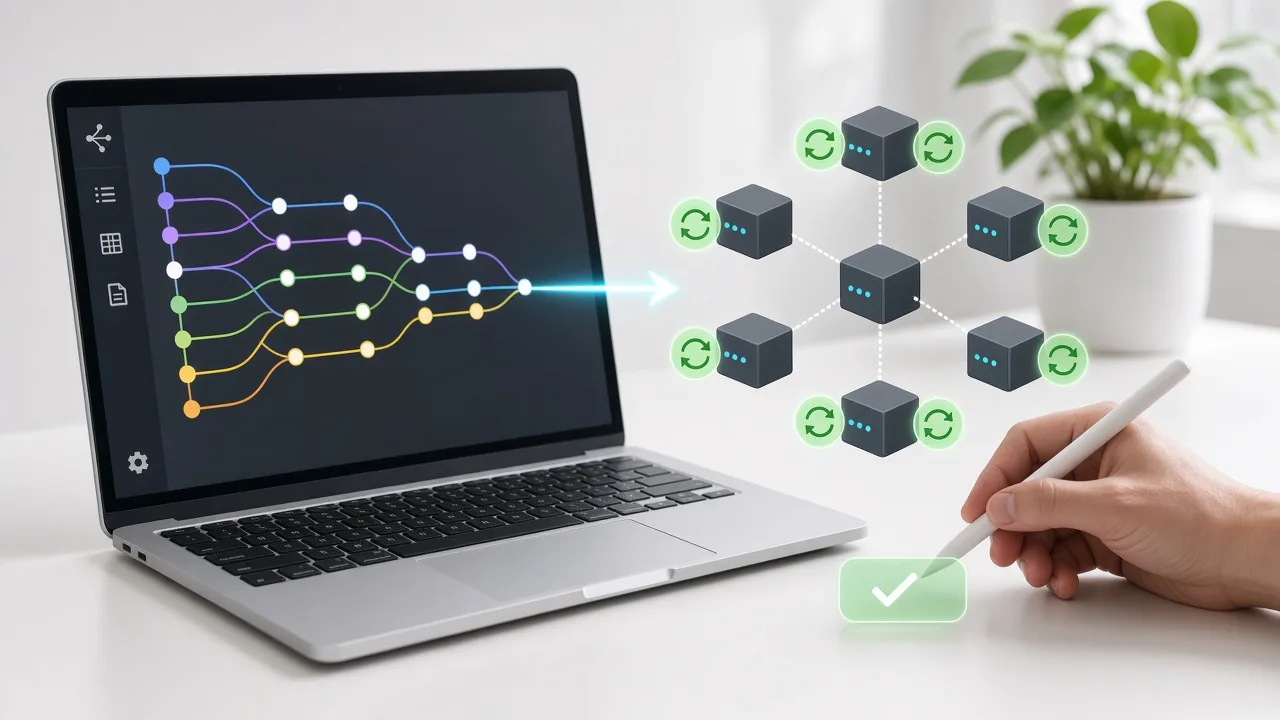
Create repeatable build, testing, and deployment workflows for web applications, mobile application backends, APIs, and enterprise software.
Choosing DevOps tools requires more than selecting popular technologies. Businesses need an environment that their teams can maintain, secure, and operate within their budgets. Techanic Infotech QA can help evaluate tools and practices across the following areas.
AWS, Microsoft Azure, and Google Cloud Platform, selected according to workload, architecture, compliance, and cost requirements.
Terraform, Ansible, and cloud native automation tools for repeatable infrastructure management.
GitHub Actions, GitLab CI CD, Jenkins, and Azure Pipelines, depending on repository setup, deployment targets, and team preferences.
Docker and Kubernetes for packaging, deploying, and managing containerised applications where the additional operational complexity is justified.
Prometheus, Grafana, and cloud native monitoring services for metrics, dashboards, logs, and operational alerts.
Secrets management, identity and access controls, dependency scanning, and security checks integrated into development workflows.
A well planned DevOps approach can help businesses in Qatar reduce operational friction, improve release consistency, and gain better visibility into application performance. Techanic Infotech QA evaluates existing workflows and recommends improvements aligned with each organisation's technical and business priorities.
Automated build, testing, and deployment workflows can reduce repetitive manual steps and help teams deliver approved changes more consistently.
Standardised release procedures, automated validation, and rollback planning can reduce avoidable deployment errors and simplify recovery when problems occur.
Infrastructure reviews can identify underutilised resources, unnecessary services, and opportunities to align cloud capacity with actual workload requirements.
Integrating security checks into CI CD workflows helps teams identify selected vulnerabilities earlier and apply consistent controls throughout the delivery lifecycle.
Centralised logs, metrics, and alerts provide greater visibility into system health, making it easier to investigate errors and identify performance bottlenecks.
Shared workflows, version controlled infrastructure, and consistent environments help development, operations, testing, and security teams coordinate their work more effectively.
Organisations in Qatar are investing in digital services, connected platforms, cloud infrastructure, and technology driven operations. A suitable DevOps strategy can help businesses build the delivery capabilities needed to maintain and improve these systems.

Digital transformation initiatives require technology environments that can evolve alongside business needs. DevOps practices can support this direction through repeatable deployments, infrastructure automation, and improved software delivery processes.

We help businesses evaluate cloud platforms, workload requirements, availability expectations, and infrastructure costs. Architecture decisions should reflect operational needs and any applicable data residency or contractual requirements.

DevOps workflows should incorporate appropriate access controls, secrets management, encryption, logging, and data handling practices. Implementations should be assessed against Qatar's Personal Data Privacy Protection Law and any other requirements relevant to the organisation.

Applications serving users in Qatar may require Arabic and English interfaces, including right to left presentation. DevOps pipelines can support automated testing of language configurations, interface behaviour, and application releases.

Backup procedures, recovery planning, infrastructure monitoring, and deployment rollback strategies can help businesses prepare for service disruptions and reduce avoidable operational downtime.

DevOps practices can support controlled changes to APIs, business applications, payment integrations, and internal enterprise systems while helping teams manage dependencies across environments.
Our approach to DevOps focuses on improving deployment workflows, streamlining infrastructure management, and supporting reliable software delivery. We work closely with clients to understand their technical requirements, address operational challenges, and build solutions that support their long term business goals.
Our team needed a clearer deployment process for an expanding web application. A structured DevOps engagement helped us identify where automation, environment consistency, and release checks could improve our workflow.
We wanted better visibility into application performance and cloud resource usage. A monitoring and infrastructure review gave us a clearer framework for evaluating operational issues and prioritising improvements.
Our application delivery process needed more consistency between testing and production. Standardised environments and automated validation were important areas to address as our development workload grew.
Selecting a DevOps consulting company in Qatar involves evaluating technical expertise, communication, infrastructure knowledge, security practices, and the ability to work within existing systems. Techanic Infotech QA focuses on understanding these requirements before recommending an implementation approach.
We connect infrastructure and automation decisions with your business goals, delivery priorities, operational requirements, and available resources.
We evaluate your current cloud services, repositories, applications, deployment procedures, and team capabilities before suggesting changes.
Our approach prioritises understandable, repeatable workflows that your team can maintain after implementation, rather than adding unnecessary tools or complexity.
We consider access management, secrets protection, automated security checks, infrastructure configuration, and appropriate release controls.
Depending on project needs, you can explore a defined consulting engagement, implementation support, infrastructure optimisation, or ongoing DevOps assistance.
We aim to establish clear deliverables, responsibilities, dependencies, and implementation priorities so stakeholders understand what the engagement includes.
As workloads and product requirements change, infrastructure and deployment processes may need to evolve. We help identify opportunities for improvement without assuming that every system requires a complete rebuild.
Modern DevOps environments increasingly combine automation, cloud native infrastructure, observability, and security controls. Techanic Infotech QA helps businesses assess which capabilities offer practical value for their applications and teams.
Tap a technology below to switch details
AI assisted tools can help analyse logs, summarise incidents, identify patterns, and support selected troubleshooting tasks. Their recommendations should be reviewed by engineers, especially when production changes or security decisions are involved.
The right technology choices depend on your existing architecture, operational maturity, security requirements, and budget. Newer tools should be introduced when they solve a defined problem, not simply because they are available.
Security should be considered throughout the development and operations lifecycle, from source code management to production monitoring. Techanic Infotech QA helps organisations identify suitable controls for their infrastructure, applications, deployment pipelines, and operational processes.
Apply least privilege access, controlled permissions, and appropriate authentication mechanisms across cloud accounts, repositories, deployment tools, and production environments.
Store credentials, API keys, certificates, and other sensitive values using appropriate secrets management systems instead of embedding them in source code or configuration files.
Introduce relevant source code analysis, dependency scanning, container image scanning, and infrastructure configuration checks into development pipelines.
Review network exposure, access rules, encryption settings, identity permissions, and infrastructure configurations to identify avoidable security risks.
Maintain suitable records of code changes, deployment approvals, infrastructure modifications, and privileged activities to support investigation and internal governance.
Identify where sensitive data is stored, processed, transferred, and logged. Apply suitable controls in line with Qatar's Personal Data Privacy Protection Law and other obligations applicable to the organisation.
Establish appropriate backup, recovery, and rollback procedures based on business continuity needs and acceptable recovery objectives.
Use security and operational alerts to help teams identify unusual activity, application errors, and infrastructure problems that require investigation.
Techanic Infotech QA follows a structured approach to DevOps consulting, with project phases adapted to your infrastructure, delivery goals, and operational requirements.
Phase 1
Understand Business And Technical Requirements
Review application architecture, team workflows, release expectations, and business priorities.
Assess Existing Infrastructure
Examine cloud environments, deployment pipelines, configuration practices, monitoring, and security controls.
Identify Gaps And Priorities
Document bottlenecks, operational risks, automation opportunities, and dependencies that may affect implementation.
Techanic Infotech QA offers different engagement approaches to help organisations access DevOps expertise based on their infrastructure, internal capabilities, and delivery priorities. The most suitable model depends on whether you need strategic guidance, implementation support, or ongoing operational assistance.
Ideal for organisations that need expert guidance before investing in new tools or infrastructure.
Suitable for businesses with clearly defined technical objectives and deliverables.
Appropriate for teams that need additional technical capacity for ongoing projects.
Designed for organisations that want to improve existing DevOps practices over time.
The cost of DevOps consulting depends on infrastructure complexity, the number of applications involved, cloud platform requirements, automation goals, security controls, and the level of ongoing support needed.
For initial planning, businesses can use the following indicative budget ranges in Qatari riyals (QAR). These are planning estimates, not verified quotations from Techanic Infotech QA.
QAR 5,000 to 12,000
Suitable forA focused review of existing workflows and infrastructure.
Typical inclusions
QAR 12,000 to 30,000
Suitable forDefined automation and deployment projects.
Typical inclusions
QAR 30,000 to 70,000
Suitable forMore involved infrastructure and cloud engineering work.
Typical inclusions
QAR 70,000 to 150,000+
Suitable forComplex environments with multiple applications or teams.
Typical inclusions
Cloud usage charges, third party licences, taxes, and other external costs should be identified separately in a formal proposal.
The final estimate should follow a review of your requirements.
Selecting a DevOps consulting company involves more than comparing hourly rates. Businesses should evaluate technical capabilities, implementation experience, security practices, communication, and the provider's ability to work with existing teams. Techanic Infotech QA can be evaluated against the same practical criteria.
Review whether the provider can support your required cloud platforms, CI CD tools, infrastructure automation, containers, monitoring, and security integrations.
Look for a provider that evaluates existing workflows and technical constraints before recommending tools or replacing infrastructure.
Ask how access controls, secrets management, vulnerability checks, change approvals, backups, and recovery procedures will be addressed.
Confirm that configuration details, operating procedures, architecture decisions, and maintenance responsibilities will be documented.
Compare deliverables, exclusions, third party expenses, support arrangements, and acceptance criteria rather than comparing headline prices alone.
Evaluate reporting frequency, access to technical specialists, decision making processes, and how the provider will coordinate with your internal team.
Techanic Infotech QA provides a software engineering focused approach to DevOps planning and implementation. Businesses can explore its suitability based on their specific requirements for automation, cloud infrastructure, software delivery, and operational improvements.
Before making a decision, request a defined scope, relevant project examples, proposed technologies, delivery milestones, and a transparent commercial estimate.
The DevOps requirements of a small startup differ from those of an established organisation running multiple production applications. The objective is to match DevOps practices to your current maturity and future plans without introducing unnecessary complexity.

Startups often need a practical foundation that allows developers to release features without creating unnecessary infrastructure overhead.
Typical priorities
A suitable DevOps technology stack depends on your existing applications, engineering workflows, cloud strategy, security requirements, and team expertise. Techanic Infotech QA can help assess which tools fit your environment.
Swipe or tap arrows to browse tech categories
Cloud infrastructure, managed services, deployment environments, networking, and resource management.
These technologies are examples of tools that may be considered during a DevOps engagement, not a claim that every tool is included in every project. Final selections should account for licensing, operational overhead, integration requirements, and team familiarity.
If your team is dealing with slow releases, repetitive deployment tasks, unclear infrastructure costs, or limited application visibility, a focused DevOps assessment can help identify where improvements are most valuable.
Techanic Infotech QA can help you evaluate existing processes, define a practical implementation roadmap, and explore the right combination of automation, cloud infrastructure, monitoring, and security practices. Share your current challenges, application architecture, cloud environment, and business objectives to establish a clear starting point.

DevOps practices continue to evolve as businesses adopt cloud services, container platforms, infrastructure automation, and security focused delivery workflows. Understanding these developments can help technical teams make more informed decisions.
Browse by topic
4 questions · 15 total
Tell us about your infrastructure, deployment challenges, automation goals, or cloud requirements. Techanic Infotech QA can use this information to help define a suitable DevOps consulting approach for your organisation in Qatar.
Plan your DevOps project with Techanic Infotech QA, from an initial assessment to CI CD pipelines, cloud infrastructure, monitoring, and security improvements.
Share your details to prepare an initial project enquiry.
Privacy note: Share only the information necessary to discuss your project. Personal information is handled in accordance with applicable requirements, including Qatar's Personal Data Privacy Protection Law.