

Mobile applications have become an important part of how businesses communicate with customers, manage operations, and deliver services. From booking appointments and ordering food to accessing financial services and managing business activities, mobile apps simplify everyday tasks.
In Qatar, businesses are exploring digital solutions to improve customer experiences and strengthen their operations. The country's focus on digital transformation, supported by Qatar National Vision 2030 and Digital Agenda 2030, creates opportunities for startups, enterprises, and established businesses to invest in mobile technology.
However, developing a successful mobile application requires more than choosing a design and hiring developers. Businesses must understand their audience, select the right technologies, estimate development costs, and plan for security and future growth.
This guide explains everything businesses need to know about mobile app development in Qatar in 2027, including app types, essential features, costs, development timelines, technologies, and strategies for choosing the right development partner.
What Is Mobile App Development?
Mobile app development is the process of designing, building, testing, and maintaining applications that run on smartphones and tablets. These applications help users complete tasks, access information, communicate with businesses, and use digital services.
Businesses develop mobile applications for different purposes, including online shopping, customer support, appointment scheduling, digital payments, employee management, and service delivery.
A typical mobile app development project involves several stages, starting with understanding business requirements and continuing through design, programming, testing, deployment, and maintenance.
Mobile applications generally fall into three categories.
- Native mobile applications: Apps developed specifically for Android or iOS using platform specific technologies.
- Cross platform applications: Apps built using shared development frameworks that support multiple operating systems.
- Progressive web applications: Web applications that provide selected app like experiences through compatible browsers.
The right approach depends on the intended audience, required features, development budget, and long term business objectives.
For companies planning digital transformation, mobile applications can become valuable business tools rather than simply additional customer communication channels.
Why Mobile App Development Is Growing in Qatar
Qatar continues to invest in digital infrastructure, technology adoption, and innovation across different economic sectors. These developments encourage businesses to introduce digital platforms that improve accessibility and operational efficiency.
Several factors support the growing interest in mobile applications.
Qatar National Vision 2030
Qatar National Vision 2030 supports economic diversification and the development of a knowledge based economy. Technology and innovation play important roles in achieving these objectives.
Businesses can contribute to this transformation by adopting digital tools that improve productivity and make services more accessible.
Digital Agenda 2030
Qatar's Digital Agenda 2030 provides a national direction for digital transformation, including digital infrastructure, government services, innovation, and economic development.
This creates a supportive environment for organizations considering software platforms and mobile applications.
Demand for Convenient Digital Services
Customers increasingly expect convenient ways to purchase products, book services, receive support, and manage transactions.
Mobile applications allow businesses to offer these services through a dedicated digital platform.
Business Process Modernization
Organizations are also adopting mobile technology for internal operations.
Applications for inventory management, logistics, workforce coordination, and customer relationship management can reduce manual processes and improve information accessibility.
Together, these factors make mobile app development a relevant investment for businesses preparing for 2027.
Benefits of Mobile App Development for Businesses in Qatar
A well developed mobile application can improve how a business interacts with customers and manages its operations.
Better Customer Engagement
Mobile apps provide businesses with a direct communication channel.
Companies can share order updates, service notifications, appointment reminders, and personalized recommendations through their applications.
Improved Customer Convenience
Customers can access products and services without repeatedly visiting a website or contacting customer support.
For example, a healthcare application may allow patients to book appointments, while a retail application can simplify product discovery and checkout.
Greater Operational Efficiency
Business applications can automate routine activities, connect departments, and reduce manual information handling.
Employees can access relevant data, submit requests, and track tasks from compatible mobile devices.
Stronger Brand Visibility
A dedicated mobile application gives customers another way to interact with a business.
Consistent branding, reliable functionality, and convenient features can contribute to a stronger customer experience.
New Revenue Opportunities
Businesses can introduce digital subscriptions, service bookings, marketplace commissions, and in app purchases where suitable.
However, revenue depends on market demand, product value, pricing, and customer retention.
Useful Business Insights
Analytics can help organizations understand how customers use an application.
Businesses can study popular features, customer journeys, conversion rates, and technical issues to make informed improvements.
Types of Mobile Apps Businesses Can Develop in Qatar
Different business models require different mobile application capabilities.
Choosing the right application category helps businesses define features, estimate budgets, and plan development.
Ecommerce Applications
Ecommerce apps enable customers to browse products, place orders, make payments, and track deliveries.
They can support retail stores, specialty businesses, and online marketplaces.
On Demand Service Applications
These applications connect customers with services such as cleaning, transportation, maintenance, food delivery, and home assistance.
Common features include booking, scheduling, notifications, payments, and service tracking.
Enterprise Mobile Applications
Enterprise apps support internal business processes.
They may include workforce management, reporting dashboards, attendance systems, inventory tracking, and approval workflows.
Financial Applications
Financial apps can support account management, expense tracking, payment experiences, and other financial activities.
Regulated financial services require appropriate licensing, integrations, and compliance planning.
Healthcare Applications
Healthcare apps can support appointment scheduling, patient communication, teleconsultation, and medical service coordination.
They require careful handling of sensitive information.
Educational Applications
Educational apps provide digital learning materials, assessments, communication tools, and progress tracking.
They may serve schools, training institutes, universities, and professional learning providers.
Custom Business Applications
Some organizations need applications designed around specific operational requirements.
In such cases, custom development can provide greater control over features, integrations, and business workflows.
Popular Industries Investing in Mobile App Development in Qatar
Mobile applications can support businesses across several important sectors in Qatar.
| Industry | Popular Application Solutions |
|---|---|
| Healthcare | Appointment booking, telemedicine, patient portals |
| Real Estate | Property listings, virtual tours, agent communication |
| Retail | Ecommerce, loyalty programs, order management |
| Food and Beverage | Restaurant ordering, food delivery, table reservations |
| Transportation | Taxi booking, fleet tracking, vehicle rental |
| Logistics | Shipment tracking, inventory management, delivery coordination |
| Education | Learning platforms, student management, online assessments |
| Hospitality | Hotel booking, guest services, reservation management |
| Finance | Expense management, payment services, financial dashboards |
| Construction | Project tracking, workforce coordination, site reporting |
Each industry has different technical and operational requirements.
For example, a restaurant application may prioritize order management and payment processing. A construction application may require offline access, project reporting, and employee coordination.
Businesses should evaluate industry specific workflows before selecting their development features.
Essential Features of a Successful Mobile App
The functionality of an application directly affects its usefulness and user experience.
Although every project has different requirements, several features are relevant to many business applications.
Simple User Registration
Users should be able to create accounts and access applications without unnecessary complexity.
Depending on the project, authentication options may include email, mobile numbers, or supported third party sign in services.
User Friendly Interface
A clear interface helps customers navigate features and complete tasks.
Buttons, menus, content, and forms should remain consistent throughout the application.
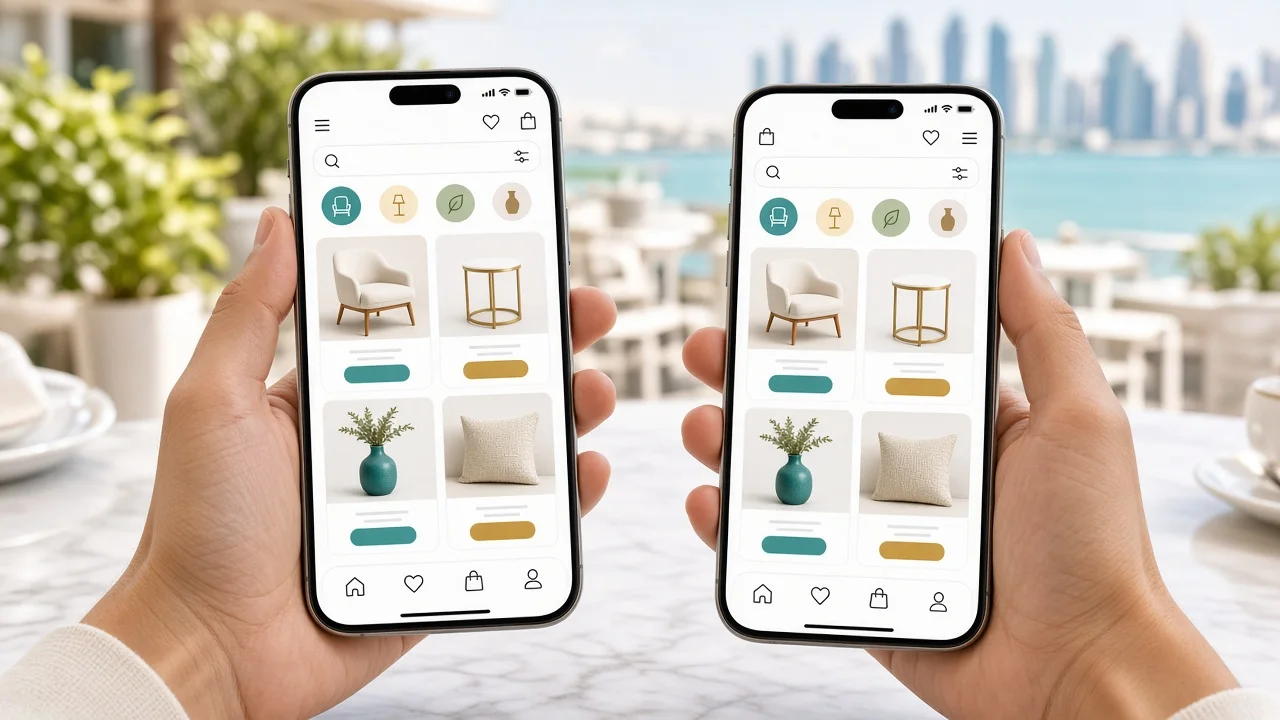
Arabic and English Language Support
Businesses targeting customers in Qatar should consider supporting both Arabic and English.
Arabic interfaces may require right to left layouts, localized content, and appropriate typography.
Secure Payment Integration
Applications handling transactions may need integration with payment providers that support the required currencies and payment methods.
Push Notifications
Notifications can inform customers about important updates, offers, bookings, deliveries, and account activity.
Search and Filtering
Search tools help users find products, services, and information quickly.
Customer Support
Support features may include live chat, help centers, contact forms, and ticket management.
Admin Dashboard
An administrative dashboard allows authorized staff to manage users, content, transactions, and operational information.
The final feature set should match the application's objectives rather than simply include every available functionality.
Advanced Features to Consider for Mobile Apps in 2027
As mobile technologies evolve, businesses can explore advanced functionality that improves convenience, automation, and personalization.
Artificial Intelligence Integration
AI can support product recommendations, automated customer assistance, document processing, and intelligent search.
The value of AI depends on reliable data, suitable models, and clear business use cases.
Intelligent Chatbots
Chatbots can answer routine questions, guide users through selected processes, and direct complex requests to human support teams.
Real Time Tracking
Location based applications may provide live updates for deliveries, transportation, and field operations.
Augmented Reality
Augmented reality can help customers visualize products, furniture, or selected spaces through compatible devices.
Voice Enabled Features
Voice interactions may improve accessibility and simplify selected user tasks.
Predictive Analytics
Businesses can use analytics to identify patterns in customer activity, operational demand, or product usage.
Biometric Authentication
Compatible mobile devices can support fingerprint or facial authentication through secure operating system interfaces.
Advanced features should be introduced when they solve a genuine user problem and justify their development and operating costs.
Mobile App Development Platforms: Android, iOS and Cross Platform
Selecting the right development platform is one of the most important technical decisions.
Android App Development
Android applications are developed for devices running Google's Android operating system.
Kotlin is a widely used language for native Android development.
Android development may be suitable when a business requires specific Android device capabilities or dedicated platform optimization.
iOS App Development
iOS applications run on supported Apple devices.
Swift is commonly used for developing native iOS applications.
Native iOS development allows teams to work closely with Apple's interface standards and device capabilities.
Cross Platform App Development
Cross platform technologies allow developers to build applications for Android and iOS using a substantial amount of shared code.
Two popular frameworks are Flutter and React Native.
- Flutter: Uses the Dart programming language and provides tools for creating interfaces across multiple platforms.
- React Native: Uses JavaScript or TypeScript and supports mobile development through the React ecosystem.
Which Platform Should Businesses Choose?
The decision should consider the target audience, device requirements, design expectations, integrations, budget, and maintenance strategy.
For many startups, a cross platform framework may offer an efficient approach to building an initial product.
Applications requiring specialized device functionality or extensive platform specific customization may benefit from native development.
Technologies Used for Mobile App Development
A mobile application's technology stack includes tools for user interfaces, backend operations, databases, hosting, security, and integrations.
Choosing suitable technologies improves maintainability and supports future application growth.
| Technology Category | Common Technologies |
|---|---|
| Android Development | Kotlin, Java |
| iOS Development | Swift, SwiftUI |
| Cross Platform Development | Flutter, React Native |
| Backend Development | Node.js, Python, Java, .NET |
| Frontend Technologies | React, TypeScript, JavaScript |
| Databases | PostgreSQL, MySQL, MongoDB, Firebase |
| Cloud Infrastructure | AWS, Microsoft Azure, Google Cloud |
| API Development | REST, GraphQL |
| Authentication | OAuth 2.0, OpenID Connect, Firebase Authentication |
| Testing | Appium, XCTest, Espresso |
A technology stack should be selected according to business requirements rather than popularity alone.
For example, a simple appointment booking application may need a relatively straightforward backend, while a large marketplace may require complex databases, real time processing, and multiple integrations.
Businesses planning broader digital platforms may also benefit from software development in Qatar when their mobile application needs to connect with websites, enterprise systems, or other custom business software.
Step by Step Mobile App Development Process
Successful mobile applications follow a structured development process.
Step 1: Business Requirement Analysis
The project begins by understanding business objectives, user expectations, target markets, and operational challenges.
The development team identifies essential features, platform requirements, integrations, and technical constraints.
Step 2: Market and Competitor Research
Market research helps businesses understand existing solutions and identify opportunities for differentiation.
Competitor analysis can reveal common features, customer expectations, and service gaps.
Step 3: UI and UX Design
Designers create user journeys, wireframes, interface layouts, and interactive prototypes.
The goal is to make the application understandable, accessible, and convenient.
Step 4: Technology Selection
Developers select the frontend framework, backend architecture, database, hosting environment, and required integrations.
These decisions consider performance, security, scalability, and development costs.
Step 5: Application Development
Developers create the application interfaces, backend services, business logic, and administrative functionality.
Work can be organized into development cycles with regular demonstrations and feedback.
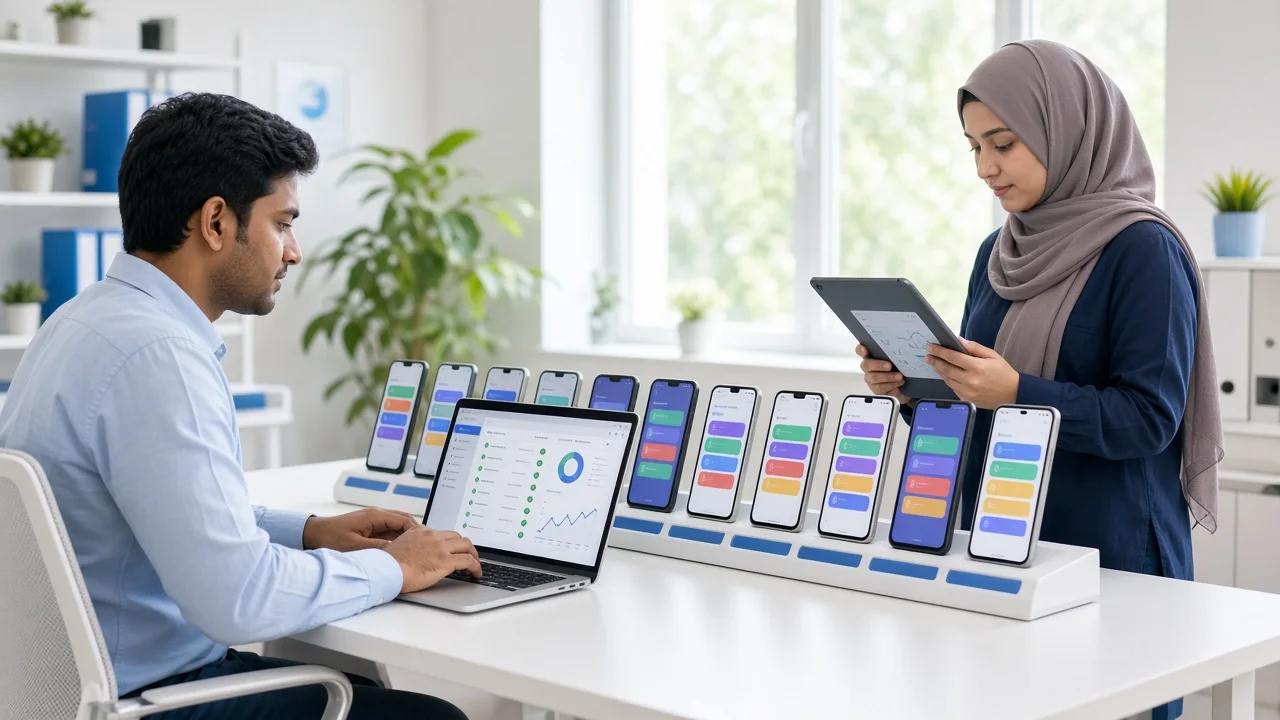
Step 6: Testing and Quality Assurance
Testing evaluates whether the application works as expected.
This includes functional testing, usability testing, compatibility checks, performance testing, and security assessments.
Step 7: Application Deployment
After testing, the app can be submitted to the relevant application stores.
Publication depends on satisfying store policies, account requirements, and review procedures.
Step 8: Maintenance and Optimization
After launch, businesses should monitor application performance, resolve issues, update dependencies, and improve features based on user feedback.
A structured approach reduces uncertainty and helps teams make informed decisions throughout development.
How Much Does Mobile App Development Cost in Qatar?
The mobile app development cost in Qatar typically ranges from QAR 20,000 to QAR 250,000+, depending on the application's complexity, features, design requirements, technology stack, and third party integrations.
A basic mobile application with limited functionality generally requires a smaller budget, while advanced applications involving artificial intelligence, real time tracking, multiple user roles, and enterprise integrations require a higher investment.
Businesses planning mobile app development in Qatar should consider both initial development expenses and ongoing costs for hosting, security, maintenance, and future improvements.
Mobile App Development Cost Breakdown in Qatar
| Mobile App Type | Estimated Development Cost |
|---|---|
| Basic Mobile Application | QAR 20,000 to QAR 35,000 |
| Startup MVP Application | QAR 25,000 to QAR 50,000 |
| Medium Complexity Application | QAR 40,000 to QAR 80,000 |
| Ecommerce Mobile Application | QAR 45,000 to QAR 100,000 |
| Food Delivery Application | QAR 50,000 to QAR 120,000 |
| Taxi Booking Application | QAR 60,000 to QAR 140,000 |
| Healthcare Mobile Application | QAR 65,000 to QAR 150,000 |
| On Demand Service Application | QAR 50,000 to QAR 130,000 |
| Enterprise Mobile Application | QAR 100,000 to QAR 200,000 |
| Advanced AI Powered Application | QAR 120,000 to QAR 250,000+ |
Note: These are indicative planning estimates, not verified market averages or fixed quotations. Actual development costs vary according to project requirements, integrations, security needs, and development scope.
What Is Included in Mobile App Development Costs?
A typical mobile app development budget may cover:
- Business Analysis: Requirement gathering, project planning, and feature prioritization.
- UI and UX Design: Wireframes, prototypes, user journeys, and interface design.
- Application Development: Android, iOS, or cross platform development.
- Backend Development: APIs, databases, administrative dashboards, and business logic.
- Third Party Integrations: Payment gateways, maps, notifications, and external services.
- Testing and Quality Assurance: Functional, compatibility, usability, and security testing.
- Application Deployment: Preparing and submitting applications to supported app stores.
Ongoing maintenance, infrastructure charges, third party subscriptions, and substantial feature enhancements may require separate budgets.
How Can Businesses Reduce Mobile App Development Costs?
Businesses can manage development expenses by starting with a minimum viable product, prioritizing essential features, choosing suitable technologies, and defining requirements before development begins.
Working with an experienced development company can also help businesses identify unnecessary complexity and select an appropriate development approach.
For a more detailed breakdown of features, pricing factors, and development budgets, explore our guide on Mobile App Development Cost in Qatar.
Overall, businesses should plan for an estimated investment of QAR 20,000 to QAR 250,000+ when developing a mobile application in Qatar for 2027.
Key Factors Affecting Mobile App Development Costs
Several decisions influence the final cost of building a mobile application.
Application Complexity
Applications with basic registration, informational screens, and limited functionality are generally less expensive than platforms with complex workflows.
Number of Features
Features such as live tracking, advanced analytics, online payments, AI capabilities, and video communication increase development effort.
Development Platform
Building an application for one operating system can require less initial development than maintaining separate native applications for Android and iOS.
Shared code frameworks may reduce duplicated work when suitable.
UI and UX Requirements
Custom animations, detailed design systems, accessibility requirements, and complex user journeys require additional design and testing work.
Third Party Integrations
Connecting payment gateways, maps, messaging services, and business systems can increase development complexity.
Security Requirements
Sensitive customer information, financial transactions, and regulated business activities may require additional security controls and assessments.
Maintenance and Infrastructure
Cloud hosting, monitoring, technical support, and software updates contribute to the application's ongoing expenses.
Defining a minimum viable product before development can help businesses control their initial budget.
How Long Does It Take to Develop a Mobile App in Qatar?
The development timeline depends on project scope, team capacity, design requirements, integration complexity, and testing needs.
Below are indicative planning timelines.
| Application Type | Estimated Timeline |
|---|---|
| Basic Mobile App | 6 to 10 weeks |
| Startup MVP | 8 to 12 weeks |
| Medium Complexity App | 3 to 5 months |
| Ecommerce Mobile App | 3 to 6 months |
| On Demand Service App | 4 to 7 months |
| Enterprise Mobile App | 6 to 12 months or longer |
These estimates assume reasonably defined requirements and timely project decisions.
Development may take longer when a project involves extensive third party integrations, regulatory reviews, legacy software, or frequently changing requirements.
Businesses can improve delivery predictability by preparing clear requirements, reviewing prototypes early, and prioritizing essential features.
Launching an MVP can also help organizations test their ideas before investing in a larger application.
Mobile App Development Trends to Watch in Qatar in 2027
Mobile technology continues to evolve, creating opportunities for organizations to improve their digital products.
The following trends are worth monitoring in 2027.
AI Powered Mobile Applications
Businesses are exploring AI functionality for personalized experiences, customer assistance, search, and operational automation.
Super App Experiences
Some businesses may consider combining related services into a single application.
However, this model requires a clear customer need and careful management of interface complexity.
Greater Focus on Application Security
As mobile services process more customer and business data, secure authentication, application testing, and privacy controls remain important.
Cross Platform Development
Flutter and React Native are likely to remain relevant choices for businesses seeking shared development across Android and iOS.
Cloud Connected Applications
Cloud services help businesses manage application data, APIs, monitoring, and infrastructure.
Mobile Commerce
Businesses can continue improving mobile shopping experiences through simpler checkout, order visibility, and personalized product discovery.
Arabic First User Experiences
Arabic language support and culturally appropriate interface design can help businesses serve a broader audience in Qatar.
These trends should guide product research rather than encourage businesses to adopt technologies that do not fit their objectives.
Challenges Businesses Face During Mobile App Development
Developing a mobile application involves several challenges that require planning and technical expertise.
Unclear Business Requirements
Projects can experience delays when features, user journeys, and success criteria are not clearly documented.
A detailed project scope helps teams align on priorities.
Budget Limitations
Limited budgets can affect feature selection, testing coverage, and development timelines.
Businesses should prioritize essential functionality before adding advanced capabilities.
Platform Compatibility
Applications must work consistently across supported devices, operating systems, and screen sizes.
Data Security
Poor security practices can expose user information and create operational risks.
Security should be considered from the earliest development stages.
Third Party Integration Issues
External APIs and services may introduce limitations, changes, or additional costs.
User Retention
Launching an application does not automatically produce active users.
Businesses need useful features, reliable performance, and ongoing improvements to encourage continued engagement.
Identifying these challenges early makes them easier to manage.
Mobile App Security, Data Privacy and Compliance in Qatar
Security and privacy are essential considerations for businesses developing applications in Qatar.
Applications may collect personal information such as names, contact details, addresses, payment information, and usage activity.
Organizations should determine what information is genuinely necessary and how it will be protected.
Personal Data Privacy Protection Law
Qatar has a Personal Data Privacy Protection Law established under Law No. 13 of 2016.
Businesses processing personal information should review the law's applicable obligations, including lawful processing, transparency, security measures, and individual rights.
The requirements depend on the nature of the information, the processing activities, and the organization's responsibilities.
Secure Authentication
Applications should use appropriate authentication methods and protect user sessions against unauthorized access.
Data Encryption
Encryption can protect sensitive information during transmission and storage.
Access Management
Organizations should restrict access to sensitive information according to employee responsibilities and operational needs.
Regular Security Testing
Security assessments can identify vulnerabilities before they affect users.
Industry Specific Requirements
Applications involving financial services, healthcare, or other regulated activities may face additional requirements from relevant authorities.
Businesses should obtain appropriate legal and regulatory guidance before deploying applications that process sensitive or regulated information.
Building security into the development process helps protect users and supports long term application reliability.
How to Choose the Right Mobile App Development Company in Qatar
Choosing a suitable development partner is an important decision for businesses investing in mobile technology.
A reliable mobile app development company in Qatar should understand the project's business objectives and provide a practical development strategy.
Evaluate Technical Expertise
Review the company's capabilities in Android, iOS, Flutter, React Native, backend development, APIs, cloud technologies, and security.
Technical expertise should match the application's actual requirements.
Review Relevant Experience
Ask for examples of completed projects or demonstrations that the provider is authorized to share.
Focus on projects with similar workflows and technical challenges.
Understand the Development Process
A development partner should explain how requirements are collected, designs are reviewed, software is developed, and quality is assessed.
Discuss Communication
Establish clear expectations for project updates, feedback cycles, issue reporting, and decision making.
Review Security Practices
Ask how the team addresses authentication, data protection, access controls, testing, and secure deployment.
Compare Pricing Transparently
A proposal should explain deliverables, assumptions, integrations, testing, maintenance, and potential additional expenses.
Check Post Launch Support
Mobile applications require maintenance after publication.
Confirm the available support arrangements, response expectations, and upgrade process.
Organizations considering integrated websites, enterprise platforms, and mobile applications may also evaluate providers offering software development services in Qatar to support the wider technology environment.
The right partner should help businesses make informed decisions rather than simply recommend the largest possible feature set.
In House Development vs Outsourcing Mobile App Development
Businesses commonly choose between building an internal development team and outsourcing the project to a specialist provider.
Both approaches have advantages and limitations.
In House Mobile App Development
An internal team works directly within the organization.
This model can provide close collaboration, direct control over priorities, and ongoing knowledge of internal systems.
However, recruiting developers, designers, testers, and technical managers requires time and financial resources.
Companies must also manage training, infrastructure, and employee retention.
Outsourcing Mobile App Development
Outsourcing allows organizations to work with an external team responsible for selected development activities.
It can provide access to specialized technical skills without requiring permanent recruitment for every role.
Businesses should evaluate communication arrangements, intellectual property ownership, confidentiality, security responsibilities, and support terms before signing an agreement.
Which Model Is Better?
In house development may suit organizations with continuous software requirements and the resources to maintain dedicated teams.
Outsourcing may suit startups, growing businesses, and enterprises seeking expertise for a defined project.
A hybrid model can also work well when internal product managers collaborate with an external development team.
Common Mistakes to Avoid When Developing a Mobile App
Several common mistakes can affect an application's budget, performance, and customer adoption.
Starting Without Market Research
An application should address a genuine customer problem.
Building features without validating user needs can result in unnecessary expenditure.
Including Too Many Features Initially
A large first release increases development complexity and can delay product testing.
Starting with essential functionality allows businesses to collect feedback earlier.
Ignoring User Experience
Complicated navigation, confusing interfaces, and lengthy registration processes may discourage users.
Underestimating Maintenance
Applications need technical updates, security improvements, and compatibility testing after launch.
Choosing Technology Without Planning
A technology decision should consider the required functionality, available expertise, integrations, and future maintenance.
Ignoring Localization
Applications targeting Qatar should evaluate Arabic language support, right to left layouts, regional preferences, and suitable payment experiences.
Skipping Quality Assurance
Insufficient testing can result in application crashes, usability issues, and security weaknesses.
Avoiding these mistakes can improve development efficiency and strengthen the final product.
Best Practices for Building a Successful Mobile App in Qatar
Businesses can improve their chances of building a useful application by following several practical principles.
Define Measurable Objectives
Establish what the application should achieve.
Objectives may include increasing bookings, reducing administrative work, improving customer service, or generating digital sales.
Understand Your Target Audience
Research customer needs, device preferences, common frustrations, and preferred interaction methods.
Start With an MVP
A minimum viable product focuses on essential functionality.
It allows businesses to test assumptions and refine the product using actual feedback.
Prioritize Application Performance
An application should load efficiently, respond consistently, and remain usable across supported devices.
Design for Arabic and English Users
Consider localization requirements from the beginning rather than treating them as an afterthought.
Protect Customer Information
Apply appropriate security controls and understand the privacy obligations relevant to the application.
Monitor Performance After Launch
Use analytics, error monitoring, customer feedback, and operational reporting to identify improvements.
Plan for Future Growth
Choose architecture and technologies that can support reasonably anticipated changes in users, transactions, and features.
These practices help businesses develop applications that remain useful beyond their initial release.
Why Choose Techanic Infotech for Mobile App Development in Qatar?
Selecting an experienced technology partner can simplify the process of turning a business idea into a functional mobile application.
Techanic Infotech provides mobile application development, custom software development, website development, AI solutions, and ongoing application maintenance for businesses with different technical requirements.
Founded in 2020, the company works with startups, established organizations, and enterprises across international markets.
Experienced Development Team
Techanic Infotech has more than 70 in house engineers working across software and application development technologies.
The team supports projects involving Android, iOS, Flutter, React Native, backend systems, and business integrations.
International Project Experience
With more than 730 satisfied clients across 40 plus countries, Techanic Infotech brings experience working with different business requirements and digital product needs.
Custom Development Approach
Projects can be planned around business objectives, target users, operational requirements, and future improvements.
Arabic and English Application Development
Businesses targeting Qatar can request applications designed for both Arabic and English users, including appropriate interface localization.
Mobile and Software Expertise
Organizations can work with Techanic Infotech on mobile applications and related software systems, helping connect customer facing applications with backend platforms and operational tools.
Ongoing Application Support
The company offers post launch maintenance and technical assistance, with a stated response commitment of within 24 hours.
Whether a business needs a startup MVP, customer application, or enterprise mobile solution, the development approach should begin with a clear understanding of its intended users and business goals.
Businesses planning a new project can also explore options to hire mobile app developers in Qatar through a development partner that can provide suitable technical expertise.
Future of Mobile App Development in Qatar
The future of mobile applications in Qatar will be influenced by digital transformation initiatives, customer expectations, security requirements, and advances in software technologies.
As organizations modernize their operations, mobile applications can become more closely connected with enterprise platforms, customer relationship systems, and digital services.
Artificial intelligence may create opportunities for smarter customer assistance, improved search, personalization, and process automation.
Cloud infrastructure can support connected services and help businesses manage application operations more efficiently.
Businesses may also place greater emphasis on accessible interfaces, Arabic language experiences, secure data handling, and dependable application performance.
For startups, mobile applications can provide a way to test new service ideas and reach customers through digital channels.
For established organizations, applications can support process improvements, customer engagement, and new business models.
The most successful applications are likely to be those that solve clear problems, remain easy to use, and evolve according to customer needs.
Conclusion
Mobile app development in Qatar offers opportunities for businesses seeking to improve customer experiences, modernize operations, and introduce digital services.
However, successful development requires careful planning, suitable technologies, realistic budgets, security considerations, and a clear understanding of customer needs.
Businesses should begin by identifying the problem their application will solve and selecting the features required to address it.
The next steps involve evaluating platforms, planning development timelines, choosing an appropriate technology stack, and working with a qualified development team.
As Qatar continues its digital transformation journey, thoughtfully designed mobile applications can play an important role in supporting business growth and operational efficiency.
Whether you are developing your first mobile application or improving an existing digital product, a well defined development strategy will provide a stronger foundation for 2027 and beyond.
Frequently Asked Questions
1. How much does mobile app development cost in Qatar in 2027?
The estimated mobile app development cost in Qatar ranges from QAR 20,000 to QAR 250,000+. Basic applications may start at QAR 20,000, while medium complexity apps can cost QAR 40,000 to QAR 80,000. Advanced enterprise applications and AI powered solutions may require QAR 100,000 to QAR 250,000 or more. Final costs depend on features, platforms, design, integrations, and development requirements.
2. How long does it take to develop a mobile app in Qatar?
A basic application may take approximately 6 to 10 weeks. Medium complexity applications may require 3 to 5 months, while complex enterprise platforms can take 6 to 12 months or longer. The actual timeline depends on requirements, integrations, testing, and project resources.
3. Which technology is best for mobile app development in Qatar?
Flutter and React Native are useful options for many cross platform applications. Kotlin is commonly used for native Android development, while Swift is widely used for native iOS development. The best technology depends on the application's functionality, device requirements, budget, and maintenance strategy.
4. Can businesses develop mobile apps in both Arabic and English?
Yes. Mobile applications can support Arabic and English interfaces. Proper localization should include translated content, suitable typography, right to left interface support where required, and testing of the user experience in both languages.
5. How can I hire mobile app developers in Qatar?
Businesses can hire mobile developers through internal recruitment, freelance contracts, or specialist development companies. Before hiring, evaluate technical skills, relevant project experience, development processes, communication, security practices, and maintenance capabilities. A clear project scope will make it easier to compare proposals and choose suitable developers.
6. Is Flutter suitable for mobile app development in Qatar?
Flutter can be suitable for applications targeting both Android and iOS. It allows development teams to share substantial portions of application code across supported platforms. However, the decision should consider platform specific requirements, integrations, performance expectations, and the team's technical capabilities.
7. What features should a business mobile application include?
Common features include user registration, secure authentication, simple navigation, notifications, search, customer support, analytics, and administrative tools. Depending on the business model, additional features may include payment processing, booking systems, location services, and Arabic and English language support.
8. How can businesses reduce mobile app development costs?
Businesses can reduce unnecessary spending by defining clear requirements, prioritizing essential features, starting with an MVP, reusing suitable technology components, and avoiding frequent changes during development. A realistic maintenance budget also helps prevent unexpected expenses after launch.